
Badrinath Temple Guide 2026: Darshan Timings, History & Travel Tips
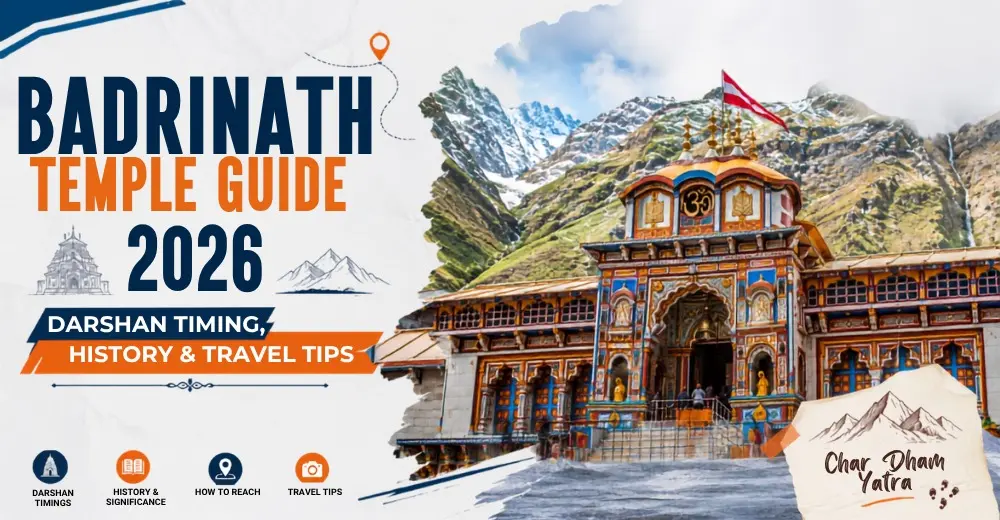
Badrinath Temple is one of the holiest pilgrimage sites in India. Dedicated to Lord Vishnu, the temple is part of both the Char Dham Yatra (Badrinath, Dwarka, Puri, and Rameswaram) and the Chota Char Dham Yatra (Yamunotri, Gangotri, Kedarnath, and Badrinath). Every year, lakhs of devotees from across the country visit this sacred shrine to seek the blessings of Lord Badri Narayan and experience the divine beauty of the Himalayas.
If you are planning a pilgrimage in 2026, this complete guide will help you understand the temple’s history, darshan timings, travel routes, weather conditions, and essential tips for a comfortable journey.
History of Badrinath Temple
The history of Badrinath Temple dates back thousands of years and is deeply rooted in Hindu mythology. According to legend, Lord Vishnu came to this region to meditate. Seeing him exposed to the harsh Himalayan climate, Goddess Lakshmi transformed herself into a badri tree (Indian berry tree) to protect him from snow and strong winds. Pleased by her devotion, Lord Vishnu named the place Badrikashram, which later became known as Badrinath.
The temple is believed to have been re-established by the great philosopher and saint Adi Shankaracharya during the 8th century. It is said that he recovered the idol of Lord Vishnu from the Alaknanda River and enshrined it in the present temple. Since then, Badrinath has remained one of the most important Vaishnav pilgrimage destinations in India.
The black stone idol of Lord Badri Narayan, seated in a meditative posture, is considered one of the eight self-manifested (Swayambhu) idols of Lord Vishnu.
Badrinath Temple Darshan Timings 2026
The temple remains open only for about six months every year because of heavy snowfall during winter.
• Opening Date (2026): 23 April 2026
• Closing Date: 13 November 2026
Daily Darshan Timings
• Morning Darshan: 4:30 AM to 1:00 PM
• Evening Darshan: 4:30 PM to 9:00 PM
Special pujas such as Mahabhishek, Abhishek, Vishnu Sahasranama Path, and evening Aarti are performed daily. Devotees who wish to participate in these rituals should book them in advance during the peak pilgrimage season.
Best Time to Visit Badrinath
Although the temple remains open from April to November, each season offers a different experience.
May to June
This is the most popular time to visit Badrinath. The weather remains pleasant, with temperatures ranging between 8°C and 18°C. Roads are generally in good condition, making it an ideal season for families and senior citizens. However, this is also the busiest period, so hotels and transport should be booked well in advance.
July to August
The monsoon season transforms the valley into a lush green paradise. However, heavy rainfall may lead to landslides, roadblocks, and travel delays. Pilgrims planning to travel during this period should keep extra buffer days in their itinerary.
September to October
Many experienced travelers consider this the best season to visit. The skies remain clear, the mountain views are spectacular, and the crowds are comparatively smaller. The weather is cool and comfortable, making sightseeing more enjoyable.
How to Reach Badrinath
By Air
The nearest airport is Jolly Grant Airport, Dehradun, located around 310 km from Badrinath. From the airport, taxis and buses are available for the onward journey.
By Train
The nearest railway stations are
• Haridwar Railway Station
• Rishikesh Railway Station
Both stations are well connected to major Indian cities.
By Road
Badrinath has excellent road connectivity during the pilgrimage season. Regular buses and taxis operate from Haridwar, Rishikesh, Dehradun, and Joshimath.
The most common route is
Haridwar → Rishikesh → Devprayag → Srinagar → Rudraprayag → Karnaprayag → Chamoli → Joshimath → Badrinath
The journey offers breathtaking views of rivers, valleys, and Himalayan peaks.
Places to Visit Near Badrinath
A visit to Badrinath is incomplete without exploring the nearby attractions.
Mana Village
Located just 3 km from the temple, Mana Village is known as the last Indian village before the Indo-Tibet border. The village is famous for its traditional lifestyle, local handicrafts, and mythological significance.
Tapt Kund
Before entering the temple, devotees traditionally take a holy dip in the naturally occurring hot water spring known as Tapt Kund. Despite the freezing weather outside, the water remains warm throughout the year.
Brahma Kapal
Situated on the banks of the Alaknanda River, Brahma Kapal is considered one of the most sacred places for performing Pind Daan and Shraddha rituals for ancestors.
Vyas Gufa
This ancient cave is believed to be the place where Sage Ved Vyasa composed the Mahabharata while Lord Ganesha wrote it down.
Ganesh Gufa
Located near Vyas Gufa, this cave is associated with Lord Ganesha and attracts pilgrims interested in Hindu mythology.
Bheem Pul
A massive stone bridge across the Saraswati River, Bheem Pul is believed to have been placed by Bhima for Draupadi during the Pandavas’ journey to heaven.
Weather in Badrinath
Weather changes quickly in the Himalayas, so pilgrims should always be prepared.
• Summer: 8°C to 18°C
• Monsoon: 8°C to 16°C
• Autumn: 2°C to 15°C
• Winter: Heavy snowfall, temperatures below 0°C, and the temple remains closed. Even during summer, mornings and nights can be quite cold.
Essential Things to Carry
Packing wisely makes the journey more comfortable.
Carry the following items:
• Valid government photo ID
• Char Dham registration documents
• Warm jackets and thermal wear
• Woollen cap and gloves
• Comfortable trekking or sports shoes
• Raincoat or umbrella
• Personal medicines
• Power bank and mobile charger
• Sunglasses and sunscreen
• Water bottle and light snacks
• Small backpack
• Cash, as ATM availability may be limited
Travel Tips for Badrinath Yatra 2026
• Complete your Char Dham Yatra registration before starting the journey.
• Book hotels and transport well in advance, especially for May and June.
• Start early every morning to avoid mountain traffic and weather-related delays.
• Stay hydrated and avoid overexertion, as Badrinath is located at a high altitude.
• Wear layered clothing because temperatures fluctuate throughout the day.
• Respect temple traditions and dress modestly.
• Follow instructions issued by local authorities and weather advisories.
• Senior citizens and travelers with heart or respiratory conditions should consult a doctor before the trip.
• Keep emergency contact numbers handy and inform your family about your travel plans.
• Avoid littering and help preserve the pristine Himalayan environment.
Conclusion
Badrinath Temple is much more than a pilgrimage destination—it is a place where spirituality, mythology, and the natural beauty of the Himalayas come together. From the sacred Alaknanda River and the hot springs of Tapt Kund to the legendary Mana Village and the divine darshan of Lord Badri Narayan, every moment of the journey leaves a lasting impression.
If you are planning your Badrinath Yatra 2026, prepare well in advance by completing your registration, booking accommodation early, packing suitable clothing, and keeping an eye on weather updates. With proper planning and a respectful approach to the sacred surroundings, your visit to Badrinath can become a truly unforgettable spiritual experience for you and your family.